By ArtxFilms Editorial Team | Reviewed by Video Production & Brand Storytelling Specialists | Sep 2026
How This Article Was Created
This article combines Artxfilms’ first-hand experience in corporate, commercial and AI-assisted video production with publicly available research from Google, Wyzowl and HubSpot. Examples from Artxfilms projects are based on work completed for real clients.
Imagine someone asking for an AI search engine:
“Which Pakistani software companies can help a growing business automate its operations?”
The answer won’t come from a single keyword. It will be pulled from product pages, expert articles, customer reviews, and increasingly, from videos that explain what a company does and how it works.
That’s where video content for AI search visibility becomes strategic.
AI-powered search is changing how people discover brands. Google reports that AI Overviews now reach more than 2.5 billion monthly active users, while AI Mode has reached one billion users.
In 2026, Google Search also became more multimodal: people can search using text, images, files, videos, and even open Chrome tabs as part of their query.
For brands, the opportunity isn’t just to “optimize videos for AI.” It’s to create useful, people-first video content that gives search systems and real humans more reasons to understand, trust, and remember the brand.
In this post, we’ll show how brands, especially in Pakistan, can use corporate video production, commercial video production, and targeted business video content to improve visibility in AI-driven search, while building long-term brand visibility through video content.
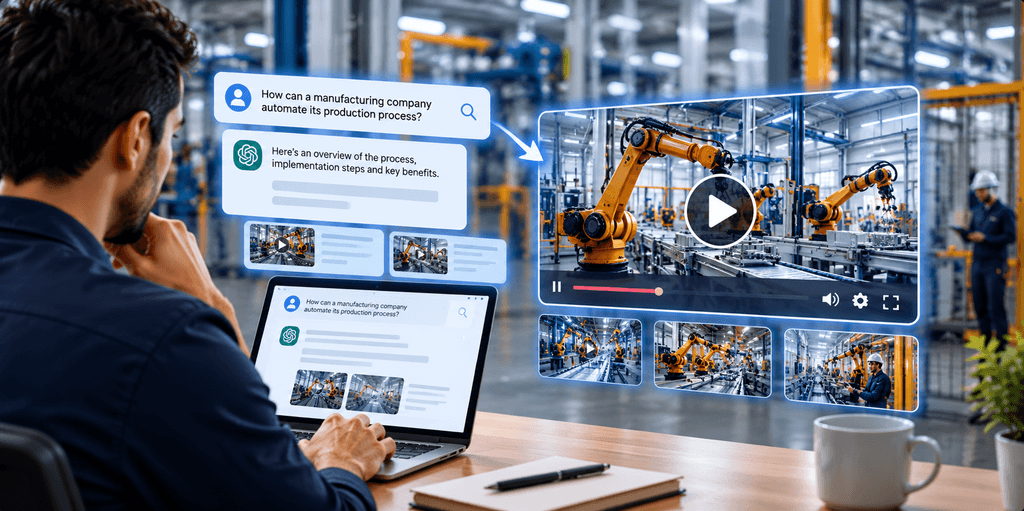
Search Is Becoming a Conversation
People don’t always search with short keywords anymore. They ask complete questions, add context and expect a useful answer.
Start With How People Search
A customer might not search for “industrial automation company.” They may ask which company can automate a particular process, what the implementation involves, or whether it is worth the investment.
Those questions require more than a definition. They need explanation, examples and context. Video can be particularly useful when the answer is easier to understand when someone shows it rather than simply describing it.
Can Your Brand Show the Answer?
Think about a manufacturing company trying to explain its process through a blog post. The written explanation can cover the important details, but video can take the viewer inside the facility and make the process easier to understand.
That difference matters. Sometimes the clearest way to explain something is not to write more about it, but to show what happens.

Video Gives Brands More to Say
A website might tell people what a company offers. Video gives the brand more room to explain the thinking, process and experience behind it.
Look Beyond What a Product Page Says
Consider a technical product with several features that aren’t immediately obvious from a product page. A short demonstration can make those features much easier to understand.
That is one reason video remains so effective for businesses.
Research found that 96% of people have watched an explainer video to learn about a product or service.
(Source: LinkedIn)
This is where commercial video production can become more than advertising. A well-made video can make the product easier to understand.
Turning Existing Knowledge into Content
A surprising amount of useful business knowledge never leaves the company.
It stays in meetings. It comes up during client conversations. Someone explains the same complicated issue to a prospect for the tenth time. Eventually, there is a simple explanation hiding inside all those conversations.
In our own production work, we’ve found that technical and industrial businesses often have plenty of useful knowledge inside the company, but struggle to turn that knowledge into content. Interviews with engineers, managers and subject-matter experts can uncover explanations that would otherwise never make it onto the website.
Video gives brands a practical way to turn that knowledge into content people can use. And this is how video content improves brand visibility.
Don’t Turn Every Video into Sales Content
Brands often feel pressure to put a product, offer or CTA into every piece of content. That can make useful information feel like an advertisement.
Imagine a camera brand publishing a useful video about shooting in low light. It doesn’t need to be spent telling viewers which camera to buy.
The brand is still making an impression. People learn something, associate that knowledge with the company and have a reason to return.
That’s the importance of video content for businesses. Good content can create value before a customer is anywhere near a purchase decision.
One Shoot Can Create More Content
A video shouldn’t necessarily be treated as one finished file that gets uploaded once and forgotten.
A single useful conversation can have a much longer life.
A detailed interview can become a full YouTube video, shorter social clips, sections for a website or blog, and material for a sales presentation.
This makes video production services more valuable when they’re planned around the wider content strategy rather than a single platform.
The goal isn’t to squeeze every possible post out of one recording. It’s to make the original production work harder.
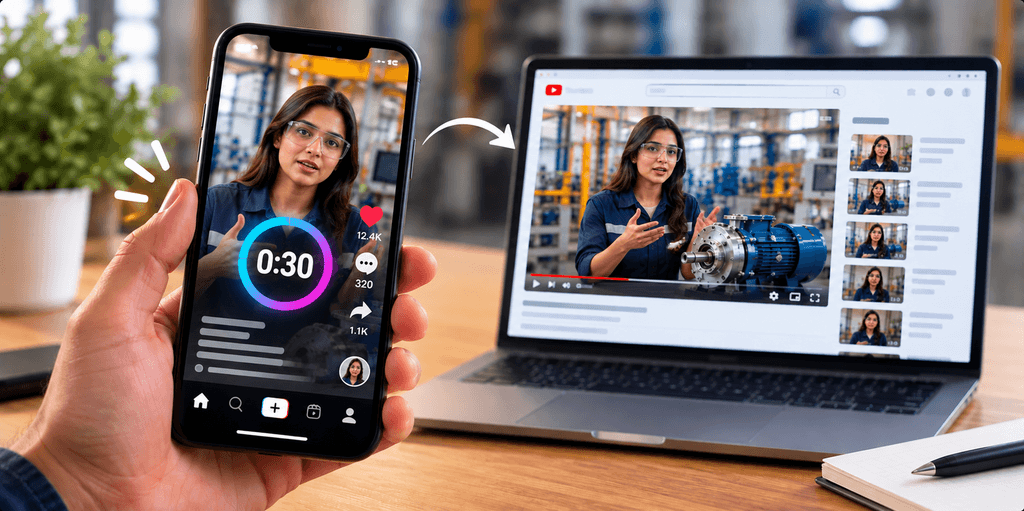
Don’t Ignore Short-Form
Short-form video still has an important role to play.
HubSpot’s Marketing report found, among 29% marketers, short-form video was the most-used content format.
(Source: HubSpot)
But short doesn’t have to mean shallow. A 30-second video can raise a question, while a longer video can answer it.

A Checklist for Choosing the Right Approach
If you’re deciding how much production a video needs, start with the purpose rather than the budget. A simple setup can work perfectly for some content, while others benefit from more controlled production.
Here’s a simple guide you can follow:
- Educational content: Keep it simple when the main goal is explaining one clear idea or answering a straightforward question.
- Product demonstrations: Invest more in visuals when showing how a product works is central to the message.
- Customer stories: Good sound, direction and thoughtful editing can make real experiences feel more natural and engaging.
- Commercial campaigns: Professional production helps when the video needs a strong visual identity, polished execution and wider campaign use.
- Corporate videos: For company profiles, interviews or detailed business stories, production quality can help present the brand with clarity and consistency.
The right approach isn’t always the most expensive one. It is the one that gives the audience the clearest experience.
If you’re launching a product, telling a customer story or explaining something visually complex, production can make a significant difference.
Lighting, sound, camera work, direction and editing aren’t there simply to make a video look expensive. They help the audience follow the story without getting distracted by poor execution.
That is where a professional video production company can add real value.
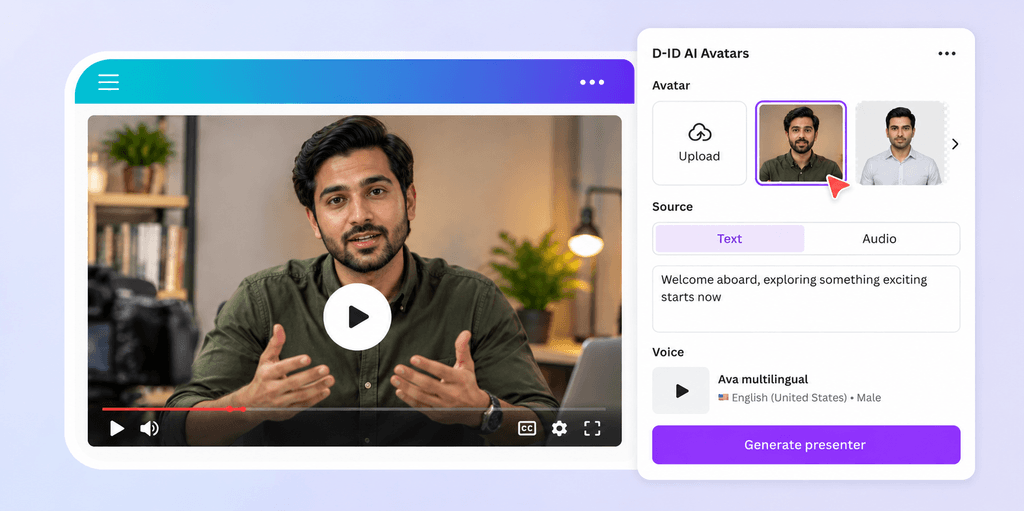
How AI Can Help with Production
AI is becoming part of that production process too.
Wyzowl’s 2026 research found that 63% of video marketers have used AI video tools, which is 51% more than the previous year.
(Source: Wyzowl)
It means that brands are increasingly integrating AI tools in their video production. AI video production can help teams explore ideas, create visual concepts, and speed up parts of production. But the technology doesn’t automatically give a brand something worth watching.
How Video Fits Into Your Content Strategy
Video works best when it’s not treated as an isolated piece of content.
A detailed article can provide depth while a video demonstrates the process. A case study can explain the result while video brings experience to life.
Together these formats give people different ways to understand the same subject.
That’s where brand visibility through video content becomes more meaningful. The video isn’t expected to do everything by itself. It becomes another useful part of the brand’s wider content library.
Three Questions to Ask Before Creating a Video
Before you start filming ask these questions;
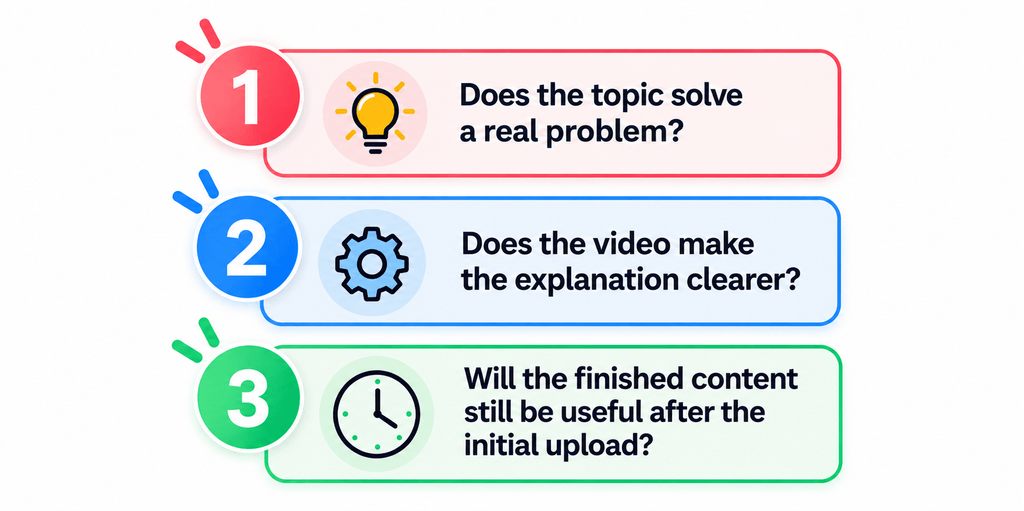
If the answer is yes, you have a stronger starting point than simply choosing a format because it is trending.
This could lead to tutorials, product demonstrations, customer stories, interviews, behind-the-scenes content or corporate video production built around a specific business challenge.
How Artxfilms Turns Video into a Search Asset
At Artxfilms, a video production company based in Pakistan, we approach video as more than a finished film. The goal is to create content that communicates clearly, answers audience needs and can continue working across different platforms.
1. Corporate Videos
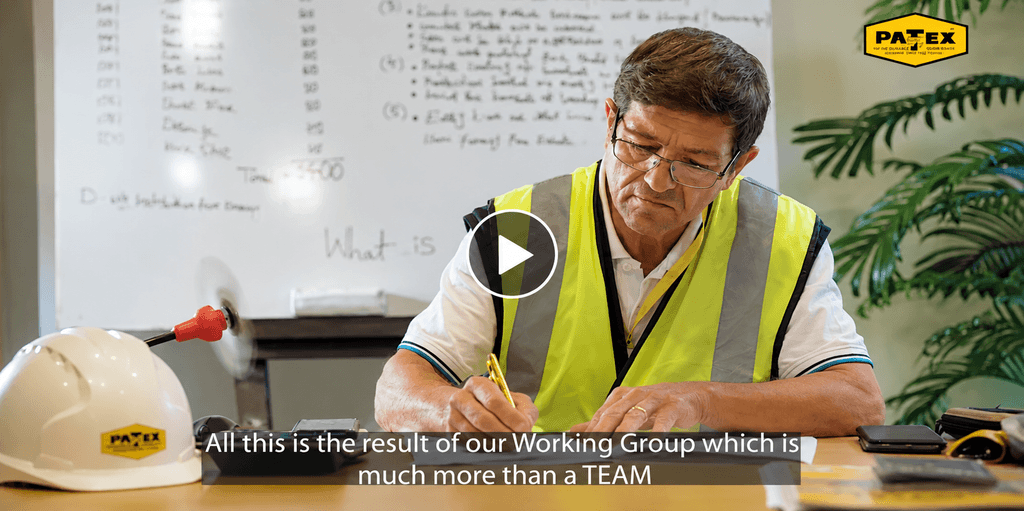
Corporate videos work best when they make a company easier to understand. For Patex, we used professional production, visited the site, interviewed people there and used supporting visuals to present the brand and its work in a clear, structured way.
2. Product and Commercial Videos

Product and commercial videos give brands space to demonstrate what makes an offering worth considering. For Apple Homeware we created visually focused content designed to present the products in lifestyle context to demonstrate their usability while keeping the storytelling engaging.
https://www.instagram.com/p/Ddnlq6llKYN
3. Content Built Around Real Questions

Useful content often starts with something people genuinely want to know. For Superstar Motorcycles, one of our clients, we developed video content around real audience interests, turning information into something easier to understand and engage with.
https://www.instagram.com/p/DdEAZvvNZIx
4. AI Video Production

AI video production opens up ways that could be difficult and expensive to produce traditionally. The same happened in the case of Nexton Pakistan, we created “Pakistan Through Little Smiles,” an AI generated 14 August video representing different cultures from across Pakistan.
The project was developed and completed within a three-day timeline, from finalizing clips and audio to completing the edit.
With 12+ years of production experience, Artxfilms combines creative direction, production and post-production to create video content with a clear purpose whether the goal is to explain, demonstrate, engage or tell a story.
Conclusion
AI-powered search is giving people new ways to discover and explore brands. But the response doesn’t need to be complicated.
Create useful videos, answer real questions, show people something they genuinely want to understand because visibility matters, but having something valuable to show is what makes that visibility worthwhile.
Have a video project in mind? Talk to the Artxfilms team today.
FAQS
1. Why do brands need more video content in 2026?
Video helps brands explain, demonstrate and communicate ideas in a format people increasingly prefer to consume.
2. How does video content help brands get discovered?
Useful videos can answer real customer questions and give brands more opportunities to appear across search, social platforms and content discovery.
3. Why is video important for AI Search visibility?
AI-powered search can draw on different content formats, making useful videos another way for brands to provide information and build online visibility.
4. How can businesses use video content to reach more consumers?
Create videos around customer questions, product demonstrations, tutorials, expert insights and stories, then distribute them across relevant platforms.