By Artxfilms Editorial Team | Reviewed by Video Production & Digital Marketing Specialists | October 2026
Imagine scrolling through Instagram. A clothing brand is showing its latest collection. A skincare brand is promising glowing skin. Another business is offering a discount you have seen at least ten times today.
You scroll past all three.
Then a video comes along that makes you pause. Maybe it starts with a brutally relatable problem, shows something you genuinely want to see, or makes you laugh before you even realize it is an ad.
What did that video do differently?
It is not always the budget or production quality. It is the ability to grab attention and connect with the audience. A social media video production agency understands how to turn creative ideas into engaging videos that stand out in crowded feeds.
So, what makes a video ad stand out? Let’s break it down.
Give People a Reason to Stop
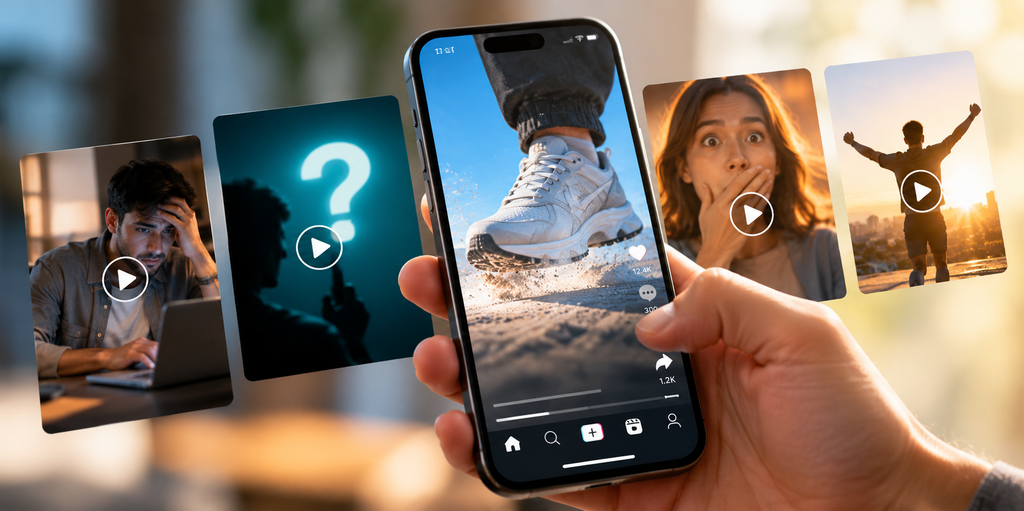
The first few seconds can determine whether someone watches your ad or keeps scrolling. Yet many brands spend those seconds introducing themselves instead of grabbing their audiences’ attention.
Skip the long logo animation and experiment with these opening approaches:
- Lead with the problem: Show the frustration your product solves before introducing the product.
- Create curiosity: Reveal an unexpected result, then explain how it happened.
- Challenge an assumption: Open with something your audience might disagree with or want to understand.
- Show the payoff first: Give viewers a glimpse of the transformation, outcome, or reveal.
For example,
a clothing brand advertising its Eid collection could open with three completely different ways to style one outfit. That’s immediately more useful to someone planning their Eid wardrobe than a slow sequence of collection shots.
The product hasn’t changed, but it gives people a reason to watch.
Practical tip: Write three different opening hooks before filming. Choose the one most relevant to your audience, then test alternatives when campaign conditions allow.
Make the Story Bigger Than the Product
A product can be interesting to someone who already wants to buy it. A story can attract people who haven’t even considered buying it yet.
That’s why the strongest video ads often connect the product to a feeling, situation, or idea that matters beyond the sale.

Example: Khaadi’s “Badal De Jahaan” Campaign
For its 14 August campaign, Khaadi asked young Pakistanis how they envisioned bringing change to the country. Their aspirations came together in an anthem titled Badal De Jahaan.
Instead of making the campaign solely about clothing, Khaadi connected its brand communication with the ambitions of young Pakistanis. The creative idea gave people something to relate to beyond the products themselves.
Read the campaign coverage by Sunday for further context.
The lesson isn’t that every brand needs a national anthem or an emotional campaign. It’s that a product becomes more memorable when it belongs to a bigger idea.
Before your next shoot, ask:
- What should viewers feel or understand?
- What makes this message relevant to them?
- How does the product naturally belong in this story?
A clear answer to these questions gives the production team a stronger creative direction.
Stop Making Every Ad Look Like an Ad
Not every video needs cinematic lighting, dramatic transitions, and a perfectly rehearsed script.
HubSpot’s social media trends research found that 77% of marketers said influencer marketing delivers better ROI than other marketing channels.
(Source: Hubspot)
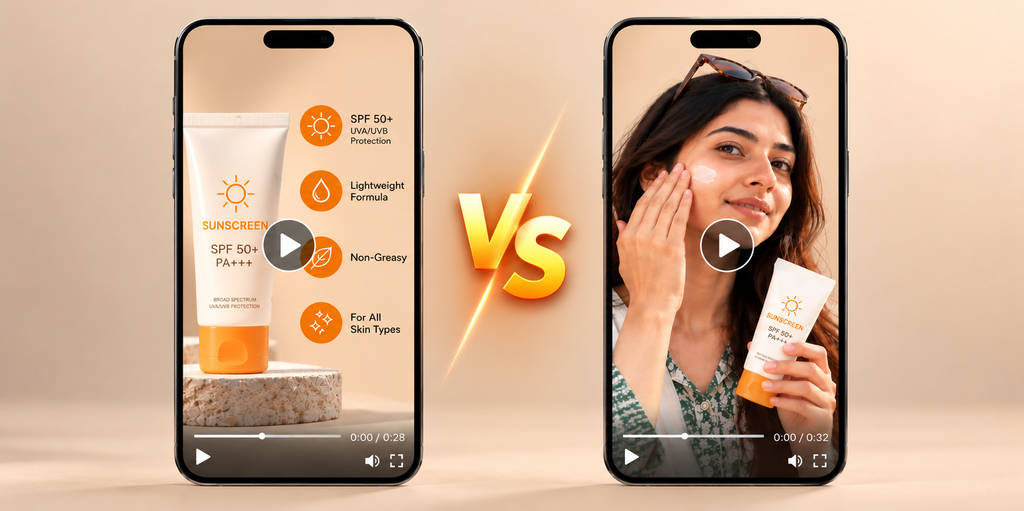
It shows that a simple demonstration or a creator speaking naturally to the camera is a better fit for the message. This is especially relevant on platforms where people are used to watching everyday content alongside paid promotions.
Consider a skincare brand introducing a new sunscreen. Instead of listing its features against a polished background, the video could follow a creator applying it before heading out in Karachi’s heat, showing the texture and explaining their experience.
That format gives viewers something concrete to evaluate.
If you’re considering user generated content services in Karachi, focus on whether the content feels believable and whether the creator can explain the product naturally.
What to Look for in UGC
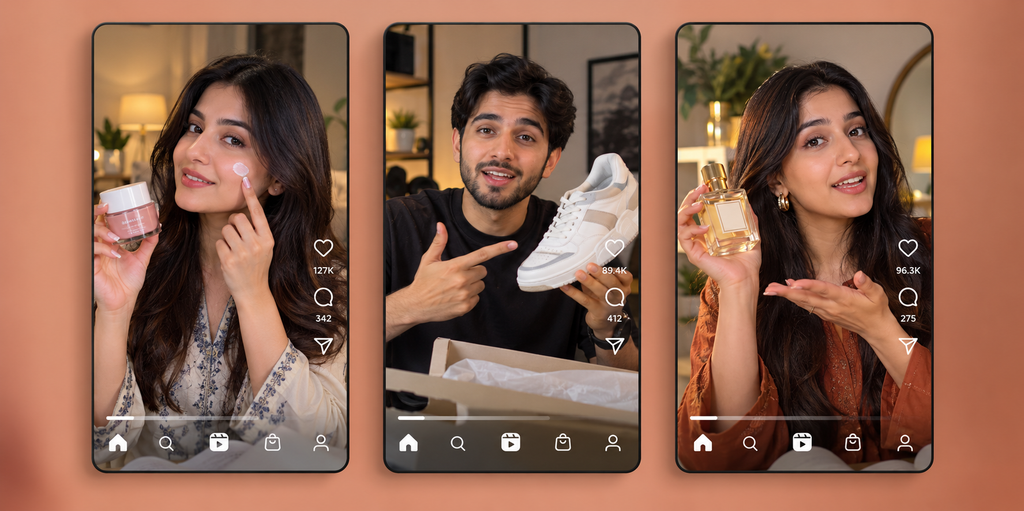
When planning user-generated content, consider:
- Relevance: Does the creator speak to the intended audience?
- Credibility: Does the presentation feel honest and appropriate for the product?
- Clarity: Can viewers understand the product’s purpose and benefits?
- Disclosure: Are paid partnerships or other material relationships clearly disclosed where required?
- Creative direction: Does the content have a clear message, even when the delivery feels informal?
An influencer marketing agency in Karachi can help identify suitable creators, but follower count shouldn’t be the only selection criterion. Audience relevance, credibility, and the creator’s ability to communicate matter too.
UGC isn’t automatically effective just because it looks casual. It still needs a strong idea.
Let the Visuals Do the Talking
Imagine advertising a perfume by spending most of the video showing someone talking about how luxurious it smells.
Now imagine a film that uses lighting, close-ups, movement, and carefully chosen settings to communicate the mood associated with fragrance.
The second approach gives viewers a visual experience rather than simply telling them what to think.
Before filming, consider:
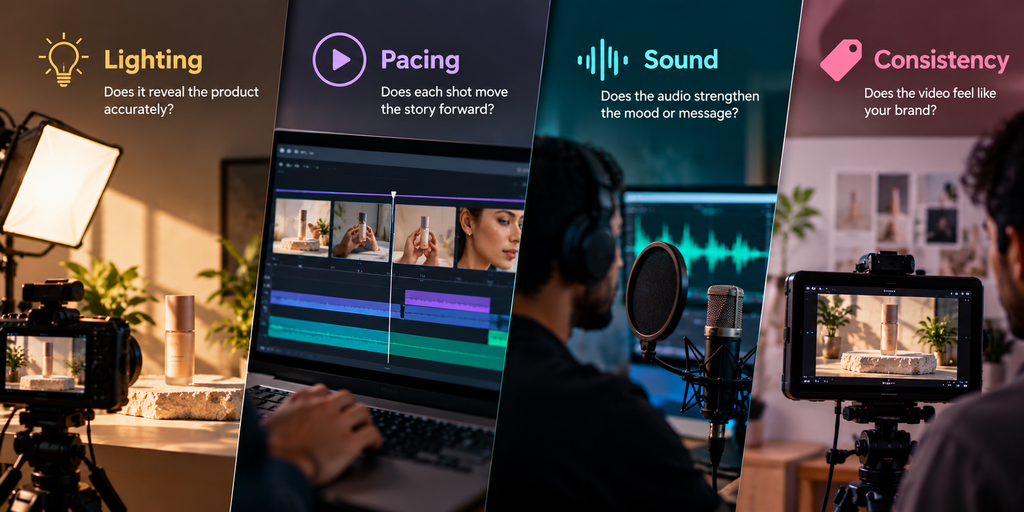
A visual content production agency should understand more than how to capture attractive footage. It should know how to use visuals to communicate a specific message.
Similarly, a social media video production agency should consider where the video will appear, how people will watch it, and what creativity needs to achieve.
Wyzowl’s 2026 research found that 63% of consumers would most like to learn about a product or service through a short video.
(Source: Wyzowl)
Good production doesn’t mean making everything look expensive. It means making every creative decision count.
Use Trends with a Clear Purpose
Trending audio, popular formats, and familiar memes can help a video feel relevant. But copying a trend without connecting it to your brand rarely gives people a reason to remember you.
The trick is to join the conversation without losing your identity.
Example: Vaseline’s “Baseline” Social Media Moment
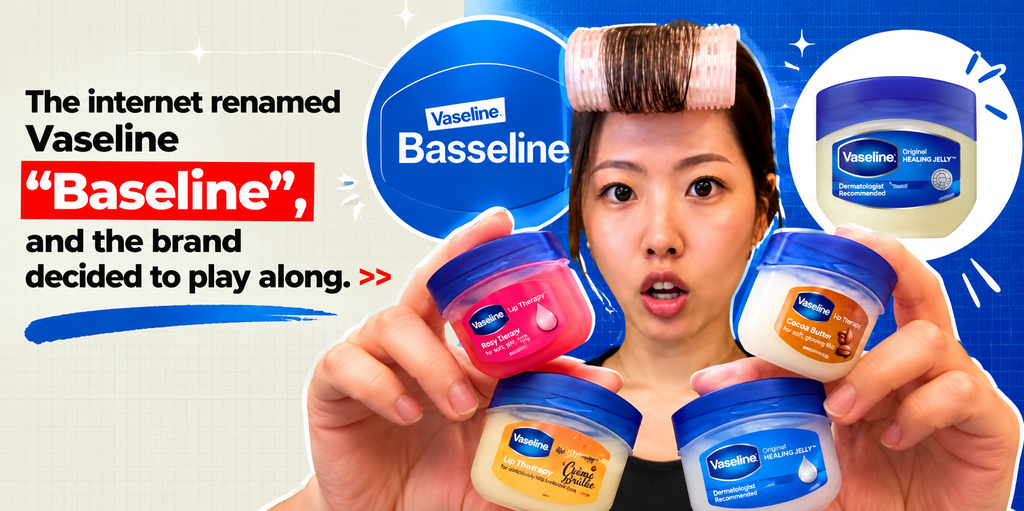
A South Korean beauty creator Min Day Lee went viral after repeatedly pronouncing “Vaseline” as “Baseline” while showing off her collection of the skincare product. Instead of correcting her or simply reposting the video, Vaseline temporarily changed its social media identity to “Baseline,” shared mock rebrand content.
https://www.instagram.com/reels/DciZA9fpSeC
The clever part? Vaseline didn’t need to invent a trend. It was a joke people were already sharing and making the brand part of it. By changing its own identity and giving the original creator credit, it turned a pronunciation mishap into a memorable brand moment.
That’s what makes trend-based content work. The brand didn’t force a product into an unrelated trend; it became part of a conversation that was already about it.
Before jumping on a trend, ask three questions:
- Does our audience relate to it?
- Can we connect it naturally to our product?
- Will viewers remember the brand, or only the joke?
If the idea works without your product or brand appearing anywhere, rethink it. The goal isn’t just to participate in a trend. It’s to make that moment work for your brand.

Explore AI Without Losing the Data
AI tools are changing how brands approach video production. They can help teams experiment with visual concepts, generate certain scenes, and explore creative directions that might otherwise be difficult to produce.
But a new tool doesn’t automatically create an interesting ad.
For example, a technology company explaining an abstract software process might use AI-generated visual sequences to make the concept easier to understand. A campaign could also use AI to explore different visual treatments before committing them to a final production.
The important part is knowing where AI adds value and where real footage, human performances, or product demonstrations are more convincing.
Start with the idea. Choose the production method afterwards.
An AI video production company in Karachi can help brands explore AI-assisted production where it serves a clear creative purpose.

Case Study: Bringing Pakistan’s Cultural Diversity to Life with AI
A practical example of AI-assisted video production is Artxfilms’ project for Nexton Pakistan, created for Pakistan’s Independence Day.
Titled Pakistan Through Little Smiles, the project was built around children representing different regions and cultures across the country.
The Challenge
According to the published Nexton Pakistan case study, the project had to be completed within three days. The team also needed to maintain visual consistency while representing different cultural identities.
The Creative Approach
The published case study describes a workflow that involved:
- Refining the visual direction for the concept.
- Selecting AI-generated video clips to represent different cultural identities.
- Reviewing and shortlisting visuals for consistency.
- Arranging the clips into a cohesive visual journey.
- Selecting suitable audio and refining the final edit, pacing, and transitions.
The project combined AI-generated visuals with human creative direction and editorial decisions.
What Marketers Can Learn From the Project?
This example illustrates how AI can support a culturally driven creative concept under a tight production timeline. It also demonstrates why AI generation alone is not enough: the visuals still need to work together as a coherent story.
The case study documents the project’s production approach and timeline. It should not be interpreted as evidence of a particular engagement rate, conversion uplift, or advertising ROI, as those outcomes are not reported there.
Read the full AI Video Production for Nexton Pakistan case study.
Test the Creative, Not Just the Budget
You’ve produced the video, launched the campaign, and started getting views. But are people paying attention? And is that attention leading anywhere?
Views alone won’t answer those questions.
Test different versions of your creative to understand what resonates with your audience.
Start with these experiments:
- Compare two opening hooks while keeping the rest of the video similar.
- Test a product demonstration against a story-led version.
- Try different video lengths and pacing.
- Compare a direct CTA with a softer invitation to explore.
- Review watch time, completion rates, clicks, and conversions against your campaign objective.
This matters when evaluating advertising companies in Pakistan, too. A production team should be able to explain the thinking behind creativity, not just deliver the final video.
A strong campaign is built on creative judgement, clear objectives, and a willingness to learn from actual audience behavior.
Which Metrics Should You Track?
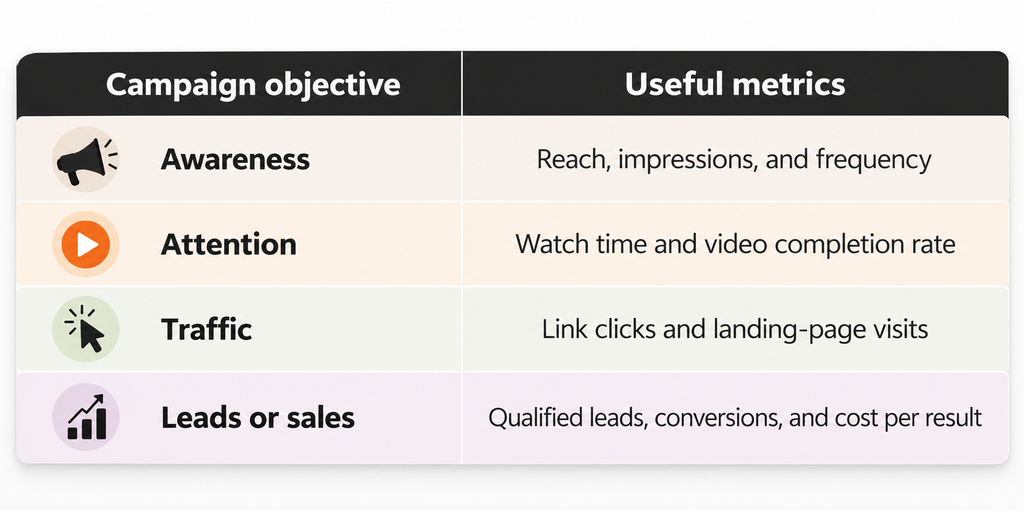
Choose metrics that match the campaign objective rather than treating views as the sole measure of success.
How Artxfilms Turns Creative Ideas Into Video Campaigns
At Artxfilms, an AI video production company in Karachi, the starting point is understanding what a brand wants to communicate and why its audience should care.
Whether the project involves commercial video production, product videos, UGC-style content, or AI-assisted visuals, the creative approach should fit the message rather than force every brand into the same format.
Because a video can look impressive and still fail to make an impression.
Ready to create video ads that capture attention and connect with your audience? Contact Artxfilms to turn your next creative idea into an impactful video campaign.

Frequently Asked Questions
1. What makes a social media video ad effective?
An effective video ad gives viewers a reason to watch, communicates a clear message, and fits the needs of its intended audience. Its success should ultimately be evaluated against the campaign’s objective.
2. Is UGC better than professionally produced video ads?
Neither format is automatically better. UGC-style content can feel conversational and relatable, while professionally produced videos can offer greater control over visuals, storytelling, and brand presentation. The right choice depends on the audience, message, and campaign goal.
3. Can AI be used for commercial video production?
Yes. AI can support concept development, visual generation, and selected production tasks. Human review remains important for storytelling, accuracy, visual consistency, and brand suitability.
4. How should businesses measure video ad performance?
Start with the objective. Awareness campaigns may focus on reach, while traffic or conversion campaigns should also evaluate clicks, qualified leads, sales, or cost per result.
5. What should brands look for in a social media video production agency?
Look for relevant portfolio work, a clear creative process, an understanding of your audience, transparent communication, and the ability to explain how the proposed video supports your marketing objective.
Sources and Further Reading
Google Search Central: Creating Helpful, Reliable, People-First Content
Wyzowl: State of Video Marketing 2026
Sunday: Khaadi’s “Badal De Jahaan” Campaign