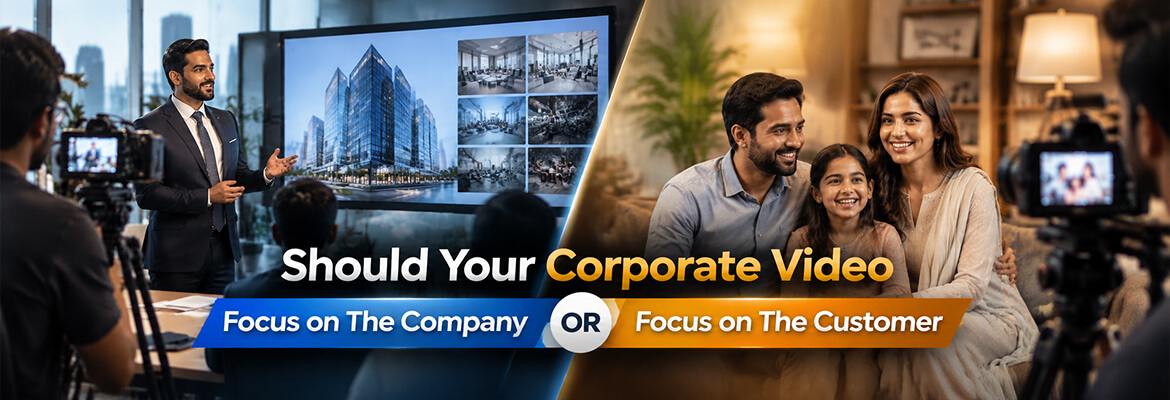
A corporate video can show a million-dollar facility, a beautifully designed office, a confident CEO, a production line running at full speed and still leave the viewer wondering:
“Okay, but why should someone care?”
That is the problem with many corporate videos. The company has spent weeks deciding what it wants to say, what achievements it wants to highlight, and which departments need to appear on screen. The result is polished, professional, and completely centered on the brand.
But your audience did not press play to admire your organization chart.
They want to understand what you solve, what you stand for, what makes you different, and what working with you means for them.
So, the question is no longer whether your company should invest in video.
It is whose story the video should tell.
What Is a Corporate Video?
Corporate video is a professional video created by a business to communicate its brand story, explain services, showcase expertise, train employees, or connect with customers. Unlike advertisements that focus mainly on selling, corporate videos focus on building understanding and trust.
Professional photography and videography services help businesses capture their brand identity, workplace environment, products, events, and customer experiences in a way that communicates their message clearly. Whether it is a company introduction, brand film, or corporate communication video, the right visuals help create a stronger connection with the audience.

Why Many Corporate Videos Fail Before They Even Begin
One of the biggest mistakes businesses make is creating videos from an internal perspective.
Inside the company, certain things naturally feel important:
- Years of experience
- Number of employees
- Office size
- Equipment
- Certifications
- Awards
- Market presence
These achievements do matter.
The problem is that viewers do not automatically understand their value.
A customer does not choose a company because it owns a large office.
They choose a company because that office represents reliability, expertise, better service, or a solution to their problem.
The difference may seem small, but it completely changes how a corporate story should be created. Effective corporate video productions focus on connecting company strengths with customer needs instead of only highlighting internal achievements.
The Problem With Making Your Company The Main Character
Many corporate films follow a familiar structure:
“Established in 2005, we are a leading company providing world-class solutions through our experienced team and advanced technology.”
This type of introduction is common because it feels safe.
But from a viewer’s perspective, the story can feel distant.
The audience is not watching because they want to memorize company information.
They are watching because they want answers:
- Can this company solve my problem?
- Can I trust them?
- Have they helped businesses like mine?
- What makes them different from competitors?
A corporate video becomes stronger when the company’s achievements are presented as proof rather than as the entire message. This is one of the reasons many corporate videos fail, and we’ve explored the common problems and fixes in Why Most Corporate Videos Fail and How to Fix Them.

Company-Focused vs Customer-Focused Storytelling
The difference becomes clearer when we compare two approaches.
Company-Focused Approach:
“We are a leading software company with 15 years of experience and a team of 100 professionals.”
This tells people about the company.
Customer-Focused Approach:
“We help growing businesses reduce operational challenges by creating software solutions designed around their needs.”
This explains the value customers receive.
The company information is still there, but it is connected to a real customer benefit.
That connection is what makes a corporate video more meaningful.
What Audiences Actually Need From Corporate Videos
A viewer needs to understand:
- What your company does
- Why your work matters
- What makes your approach different
- What results customers can expect
Effective corporate video productions focus on more than showcasing a brand. They help audiences understand the value behind a company’s services, solutions, and expertise.
Customer-focused storytelling works because it gives context.
Your technology becomes meaningful when people see what it helps achieve.
Your expertise becomes valuable when people understand how it solves a challenge.
Your process becomes interesting when viewers see the outcome it creates.
Showing capability alone is not enough. You need to show the impact behind that capability.
What Pakistani Brands Are Doing Differently
You don’t have to look far to see this shift happening in Pakistan.
Recent campaigns recognized by Effie Pakistan show brands building communication around participation, cultural relevance, customer experiences and human stories rather than relying only on traditional brand messaging.

1. Jazz – Super Soch Ka Partner
Jazz’s “Super Soch Ka Partner” campaign didn’t lead with network towers or data speeds, it led with a wife ordering a surprise cake for her husband online, a student organizing a blood drive through social media, and a shopkeeper using a translation app to serve foreign customers. Each story was ordinary, yet powerful: real people overcoming everyday challenges through digital tools, with Jazz quietly enabling their success from the background. The message wasn’t “look what we built,” it was “look what you can achieve,” turning subscribers into protagonists and the brand into their partner.

2. Food Panda – Marzi Se Manzil Tak
Food panda’s “Marzi Se Manzil Tak” campaign didn’t start with a corporate message it started with Farheen, a university student in Rawalpindi who became the city’s first female rider to support her family. In the video, she adjusts her helmet before a night delivery, laughing as she says, “People thought I was crazy, but now I’m paying my own tuition.” The brand stays in the background, letting her journey from doubt to independence carry emotional weight, proving that the most powerful corporate story is often the one the company doesn’t tell itself.

3. Ufone – Data Bohat Hai
Ufone takes the idea a step further with “Data Bohat Hai x Pakistan’s 1st Co-Created Ad.”
The interesting part is the idea of co-creation itself. The audience isn’t simply being shown a finished message; it becomes part of the creative process.
For corporate storytelling, that opens possibilities for customer interviews, employee stories, user-generated content and client-led case studies.
When Should the Video Focus on Your Company
There are situations where the company genuinely should take center stage.
A new corporate facility, merger, acquisition, major milestone or organizational transformation may require the company itself to be the subject.
The same applies to investor communications, employer-branding films, internal communications and leadership videos.
If the audience needs to understand who the organization is, a company-led structure makes sense. And if you’re exploring the different formats this can take, our guide to Types of Corporate Videos Every Business Should Know breaks down the options and when each one works best.
The important thing is to avoid confusing “company-focused” with “company-heavy.”
You can introduce the organization without making every sentence sound like an annual report.

Customer-led storytelling becomes particularly useful when the objective is to demonstrate value.
That includes:
- Customer testimonials
- Case studies
- Product explainers
- Service demonstrations
- Customer success stories
- Awareness campaigns
- Brand films
- B2B lead-generation content
- Digital campaigns
According to data reported by Shopify, 47% of companies planned to create customer testimonial videos in 2026.
(Source: Shopify)
It shows how much the customer storytelling is important and it gives the audience something to relate to: a problem, frustration, a goal, a transformation or a result.
When the company enters that story as the solution, its value becomes much easier to understand.
How to Find the Right Balance Between Company and Customer
A useful rule is:
Spend about 70% of your video showing customer challenges, solutions, and outcomes, and about 30% explaining your company’s expertise and credibility.
The exact balance depends on your industry and the purpose of the video. For example, a service-based company may focus more on customer success stories, while corporate event videography may require a stronger focus on capturing company culture, milestones, achievements, and audience experiences.
For example:
- A startup may need more focus on explaining its vision and approach.
- A manufacturing company may need more proof of quality and production capability.
- A professional service firm may need more client stories and expertise demonstrations.
The important thing is that every company detail should answer one question:
Why does this matter to the customer?
The Best Corporate Videos Connect Both
The strongest approach isn’t company versus customer.
It’s company from the customer’s perspective.
A useful storytelling framework looks like this:
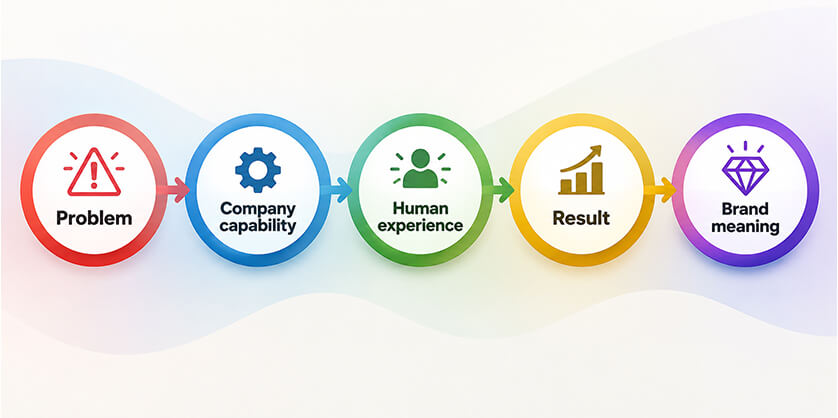
This gives the company enough space to establish credibility without turning the film into a corporate presentation.
Create Your Corporate Video with ArtxFilms
At Artxfilms, one of the best production houses in Karachi, we believe a corporate video should do more than introduce a company. It should make the audience understand the business and, more importantly, understand why the business matters.
From company profile videography services to documentaries, digital video commercials and corporate event videography, every project requires a different storytelling approach.
Our goal is to create videos that build trust, explain your value, and leave a lasting impression on your customers.
Ready to tell your brand’s story through a professional corporate video? Contact Artxfilms today and create a video that connects with your audience and strengthens your brand presence.
Frequently Asked Questions
1. Should a corporate video focus more on the company or the customer?
A corporate video should introduce the company while focusing mainly on customer needs, challenges, and outcomes. The company should act as the solution, not just the subject.
2. How long should a corporate video be?
The ideal length depends on the purpose and audience. A corporate video should be long enough to communicate the message clearly without adding unnecessary information.
3. What makes a corporate video effective?
A clear message, strong storytelling, professional visuals, and customer-focused communication help make a corporate video more engaging and memorable.
4. Why is storytelling important in corporate videos?
Storytelling helps audiences understand a company beyond products and services. It creates context, builds connection, and makes the message easier to remember.