
Imagine a potential client visiting your website for the first time. They have several companies to choose from, limited time to evaluate each one, and no direct experience with your business. Will your corporate video give them a reason to choose you, or will they simply move on to the next option?
A corporate video should do more than introduce your company or showcase impressive visuals. It should answer the questions your clients care about, demonstrate what your business can actually deliver, and show why working with you makes sense. The challenge is not getting your company on screen. It is giving people a reason to keep watching.
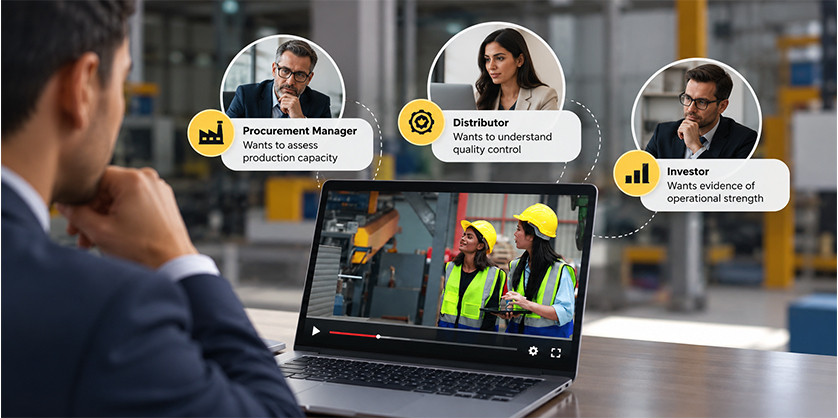
The Viewer’s Question Is Always “What’s In It For Me?”
Every viewer has a different reason for watching. A procurement manager wants to assess production capacity, a distributor wants to understand quality control, and an investor wants evidence of operational strength.
Generic statements such as “we are industry leaders” rarely answer these questions. Your video needs to demonstrate what makes your business capable of delivering on its promises.
Business benefit: A well-planned video production for businesses can address common questions before a sales meeting, helping prospects understand your operations and allowing your sales team to focus on their specific requirements.
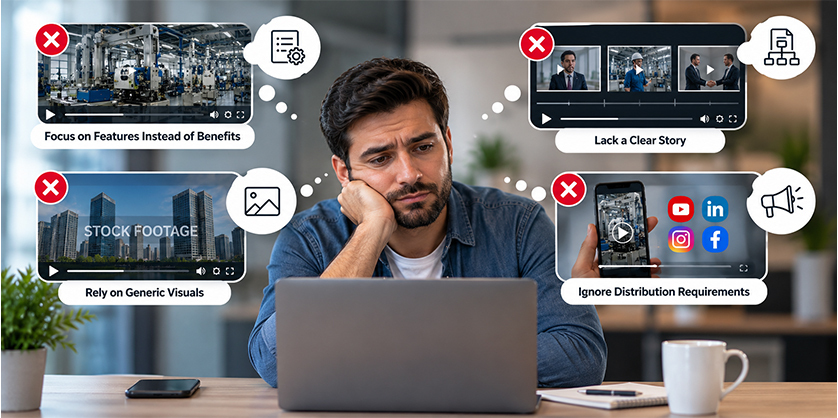
Why Do Corporate Videos Get Ignored?
Because they talk about the company instead of answering the question the viewer is silently asking: “Why should I care?”
1. They Focus on Features Instead of Benefits
Listing machinery, certifications, and services without explaining their relevance can confuse viewers. Show how your capabilities support product quality, operational efficiency, or customer requirements.
2. They Lack a Clear Story
Professional corporate videography services follow a logical structure: introduce the business, demonstrate its capabilities, provide evidence, and communicate the value to the viewer. An unclear opening or unnecessarily long introduction can discourage people from continuing.
3. They Rely on Generic Visuals
Stock footage cannot demonstrate your actual production environment or workforce. Authentic footage of your facilities, employees, and processes gives potential customers a more credible view of your business. Professional video production for businesses should reflect the company’s real operations rather than rely on generic promotional imagery.
4. They Ignore Distribution Requirements
A detailed corporate film may work well on your website or in a sales presentation, while social media often requires shorter, platform-appropriate edits. Planning distribution before production helps you get more value from the same shoot.
Businesses may also need specialised formats, such as event videography services to document conferences, exhibitions, launches, and corporate gatherings. Planning for these requirements early helps ensure that the final footage serves its intended purpose.
Pakistani Companies with Corporate Videos Worth Watching
Several Pakistani companies use corporate videography services to present their operations, manufacturing capabilities, and business identity. These examples offer useful ideas for businesses planning their own corporate films.

1. Nishat Mills Limited
Nishat Mills’ company profile video presents the company’s background and growth as part of Pakistan’s textile industry. It provides an example of how a manufacturing business can communicate its identity and industrial presence through video.
What to learn: Connect your company’s history with its current capabilities and business operations.
2. Engro Corporation
Engro’s official media gallery features company-profile content, employee stories, partner testimonials, and videos about its business activities. This range demonstrates how a company can use different video formats to communicate with different audiences.
What to learn: Develop separate videos for corporate introductions, employee engagement, partner relationships, and social impact rather than relying on a single film for every purpose.

Explore Engro’s Official Media Gallery:
https://www.engrocorporation.com/knowledge-center/media-gallery
What Can Your Business Learn from These Examples?
The right approach depends on what you need to communicate. Manufacturing companies may benefit from production-floor footage, while businesses focused on partnerships may prioritise leadership interviews and client testimonials. The common principle is to give viewers relevant information about your organization rather than simply listing services or making promotional claims.
For industrial businesses, professional video and photography can work together to present a more complete picture. Industrial videography services can document machinery, production workflows, and quality-control procedures, while industrial photography services can capture high-quality images of facilities, equipment, products, and employees for websites, brochures, catalogues, and presentations.
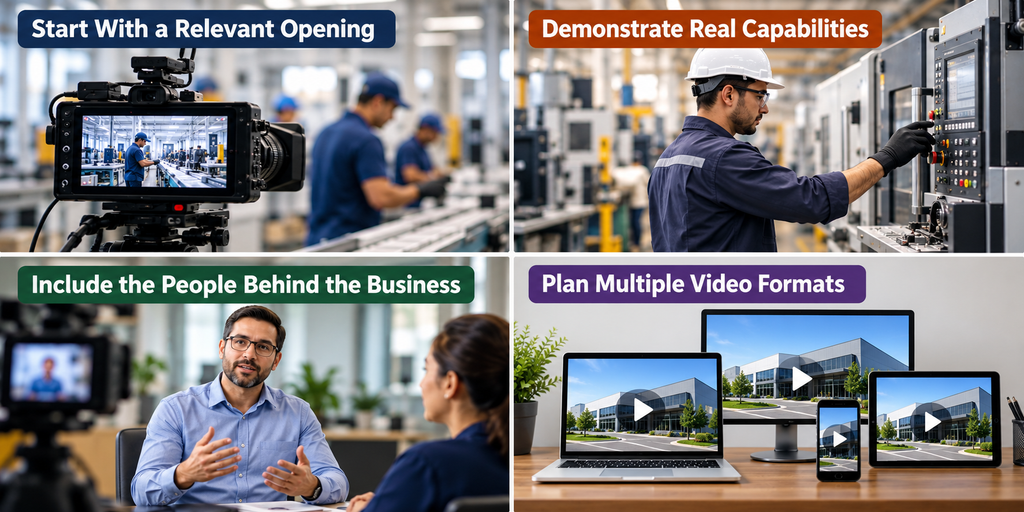
What Makes a Corporate Video Worth Watching?
The following factors play an important role:
Start With a Relevant Opening
Show something that matters to your audience within the opening seconds. This could be a manufacturing process, a product demonstration, or a real business challenge. Avoid lengthy logo animations and introductions that delay the main message.
Demonstrate Real Capabilities
Use genuine footage to show your equipment, workflows, quality checks, and employees at work. For technical and industrial businesses, these visuals help potential clients understand your operations more clearly than unsupported claims.
Include the People Behind the Business
Employee interviews and authentic workplace moments add context to your operations. They help viewers understand the expertise, experience, and human effort behind your products and services.
Plan Multiple Video Formats
Consider producing a main corporate film alongside shorter edits for your website, social media, presentations, and trade exhibitions. Each version should serve a specific purpose while maintaining consistent brand messaging.
Video can also support your digital marketing strategy. Publishing a relevant video on your website or YouTube channel, with an accurate title, description, and supporting content, can help audiences find and understand your business. Rankings and engagement are not guaranteed, so performance should be measured against your objectives.
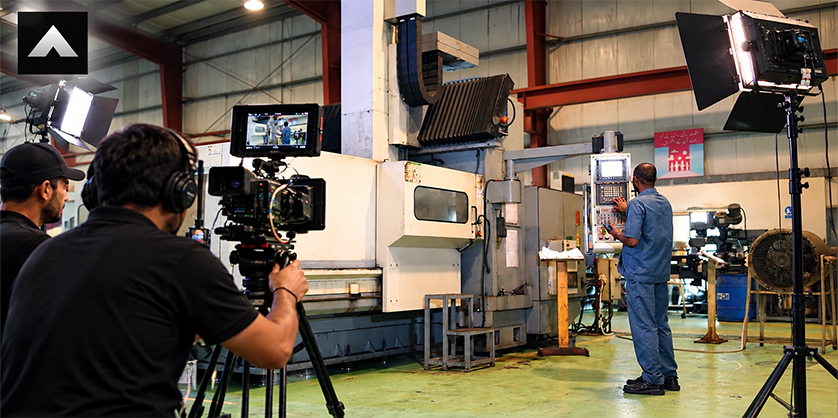
Corporate Video Production by Artxfilms
Artxfilms, a corporate video production company in Karachi, Pakistan, works with businesses and organizations to communicate their capabilities, processes, and purpose through corporate films and documentaries. These projects illustrate how a clear narrative can make complex operations and business initiatives easier to understand.
Case Study 1: KTDMC’s Corporate Video
The challenge: Karachi Tools, Dies & Moulds Centre (KTDMC), working in collaboration with PIDC and ایمان اتحاد نظم, needed to present both its manufacturing capabilities and its technical training programmes to industrial clients, investors, and prospective students.
Our approach: Artxfilms developed a visual narrative around “from creation to capability.” The production covered dies and moulds manufacturing, 3D measurement and quality control, vacuum heat treatment, and technical training, including the D.A.E. in Dies & Moulds Technology.
During the heat treatment shoot, an area-wide power outage interrupted production. The team adapted using backup lighting and portable power sources, capturing close-up footage that reflected the dedication of the people behind the process.
The outcome: The completed video was used for promotional, commercial, and institutional presentations, communicating KTDMC’s manufacturing facilities and educational mission.
Business takeaway: Showing real operations alongside the people who manage them helps technical businesses communicate their capabilities with greater clarity.
Case Study 2: Rainbow Hosiery’s Corporate Video
The challenge: Rainbow Hosiery wanted to give prospective clients a clearer understanding of its textile manufacturing processes and the procedures behind its products.
Our approach: Artxfilms filmed knitting, dyeing, laboratory testing, finishing, stitching, quality checking, and packaging. The production also highlighted employees and their contributions to the manufacturing process.
One employee, who had worked in the stitching unit for more than 20 years, described his work in terms of the comfort the finished products provide. This personal perspective helped connect the technical workflow with the people responsible for it.
The outcome: The corporate video production became a presentation asset for the company’s website and client showcases, helping communicate its production processes and workforce.
Business takeaway: For manufacturers working with overseas buyers, authentic production footage can provide useful preliminary insight into factory operations before a site visit.
Case Study 3: Clariant’s CSR Documentary
The challenge: Clariant wanted to document an education initiative supporting children in underserved communities in Karachi. The story needed to communicate the initiative’s impact through authentic experiences rather than staged corporate messaging.
Our approach: Artxpro handled the creative concept, while Artxfilms managed the production and execution. The team filmed children’s learning experiences in classrooms, homes, and community spaces, including interviews with parents and footage of educational and science activities.
The outcome: Clariant’s global CSR division used the documentary to communicate its initiative in Pakistan. The production presented the experiences of children and their communities through a documentary-style narrative.
Business takeaway: Authentic documentary footage can help businesses communicate CSR initiatives to stakeholders by showing the people and activities behind their programmes.
How Can a Corporate Video Support Your Sales Process?
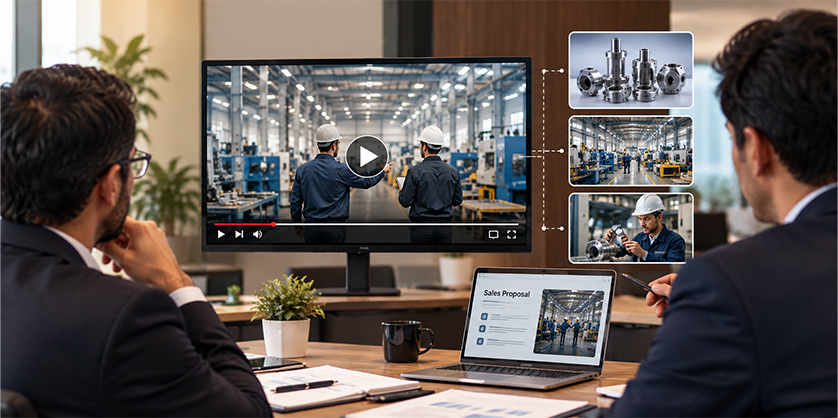
A corporate video can support your sales process by introducing your business, demonstrating your capabilities, and answering common questions before a meeting. It helps potential clients understand your products, production facilities, and quality standards, making it easier for them to evaluate your business. Your sales team can also use the video in presentations, proposals, and follow-up emails to communicate key information consistently and build confidence with prospective customers.

Who Should Appear in Your Corporate Video?
Choosing the right participants helps you communicate expertise, demonstrate operational capabilities, and build credibility with potential clients.
Company Leadership
Executives and business owners can explain your company’s vision, industry experience, and long-term objectives. Their input is particularly useful when communicating with investors, business partners, and prospective clients.
Technical Experts and Employees
Engineers, technicians, production managers, and other skilled employees can demonstrate how your business operates. Their explanations of manufacturing processes, quality control procedures, and technical capabilities give viewers a clearer understanding of your expertise.
Production and Operations Teams
For manufacturing and industrial businesses, footage of employees working with actual equipment and following established procedures can provide valuable insight into daily operations. It also recognises the people responsible for maintaining production standards.
Customers or Business Partners
Where permission is available, customer testimonials and partner interviews can add an external perspective to your corporate video. Specific feedback about a working relationship or completed project is more useful than general praise.
How Long Should a Corporate Video Be?
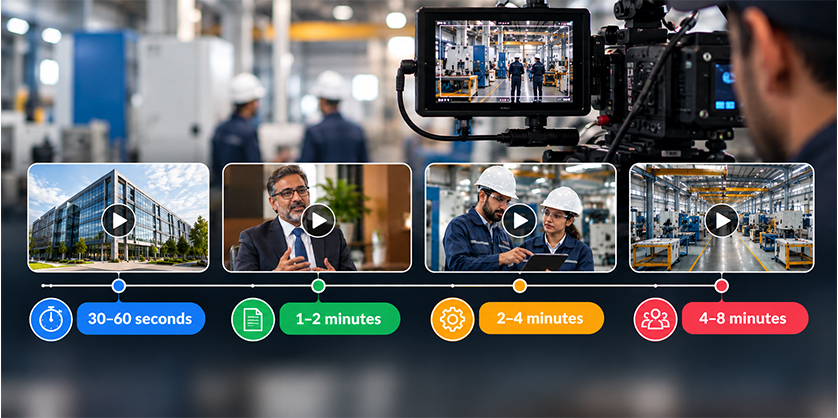
The ideal length depends on your audience, platform, and business objectives.
- 30–60 seconds: Best for social media and quick brand introductions.
- 1–2 minutes: Suitable for company overviews and promotional videos.
- 2–4 minutes: Ideal for showcasing manufacturing processes, facilities, and technical capabilities.
- 4–8 minutes: Useful for detailed corporate documentaries, training, or institutional presentations.
The key is relevance, not duration. Keep your company profile video focused on the information your audience needs, and remove footage that does not support your message.
How to Measure Your Corporate Video’s Performance
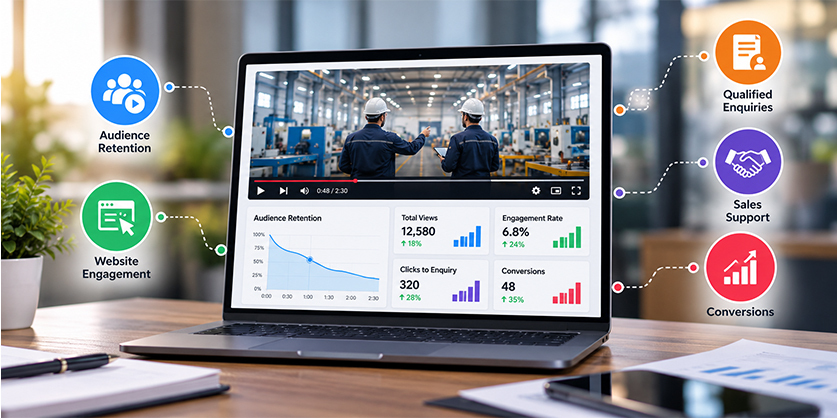
Before commissioning a corporate video, establish what success means for your business.
- Audience retention: Identify how long viewers watch and where they leave.
- Qualified enquiries: Track relevant leads generated through pages featuring the video.
- Website engagement: Monitor interactions with pages where the video is embedded.
- Sales support: Assess whether the video helps prospects understand your capabilities before meetings.
- Conversions: Where tracking allows, evaluate whether video engagement contributes to enquiries or other business goals.
Use analytics and CRM data where available. Views alone do not establish commercial success, and results should be evaluated against a clear baseline.

Give Your Audience a Reason to Watch
Your corporate video production should make it easier for potential customers to understand your business, assess your capabilities, and decide whether they can trust you as a partner.
At Artxfilms, we produce corporate videos for businesses that want to present their facilities, expertise, people, and purpose through clear, carefully planned storytelling.
For businesses in manufacturing, textiles, and other industries, the starting point is the same: understand your audience, identify the evidence they need, and build your video around it.
Contact Artxfilms to discuss your business objectives and the story your audience needs to see.
Frequently Asked Questions
1. Why does a business need a corporate video?
A corporate video helps businesses showcase their capabilities, build credibility, and communicate their value to potential customers and partners.
2. What should a corporate video include?
It should include your company’s key services, facilities, expertise, team, and relevant evidence of your capabilities, based on your target audience.
3. How much does corporate video production cost?
The cost depends on the production scope, filming locations, equipment, crew requirements, editing, and final deliverables.
4. Can a corporate video help generate leads?
Yes. A well-planned corporate video can support lead generation by explaining your services, answering customer questions, and encouraging relevant enquiries.
5. Where can you use a corporate video?
You can publish it on your website, YouTube channel, LinkedIn, sales presentations, email campaigns, and trade exhibition screens.